Best clipless pedals for efficient and stable triathlon pedalling in 2026
Looking for a new set of clipless pedals? We test some of the best options on the market for triathlon

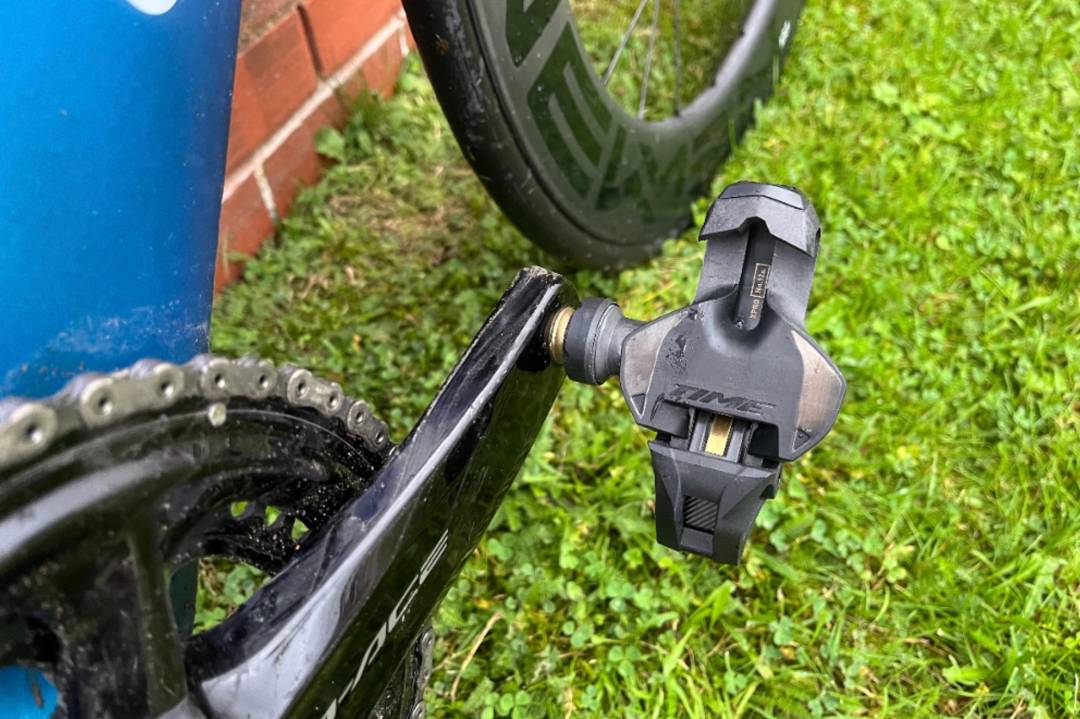
Already a tri convert or thinking about foraying into clipped-in comfort? Either way, we’ve clipped on the cleats and tested 10 sets fit for the best triathlon bikes.
Clipless (or, more accurately, clip-in) pedals have greatly evolved since the days of toe clips and straps, and most triathletes will want to take advantage of the greater efficiency offered by clipless pedals.
The pairs on test here represent a wide range of price points and are all road pedals with cleats that sit proud of the sole.
Some of the pedals tested below have extra power-reading abilities and some don’t, you’ll see this reflected in a higher weight and heftier price-tag.
Why you can trust 220 Triathlon
Our team of experts rigorously tests each product and provides honest, unbiased reviews to help you make informed decisions. For more details, see how we rate and test products.
Best clipless pedals at a glance
It’s hard to justify spending more when Shimano 105 PD-R7000 pedals (buy) are this good.
Costing slightly more, Shimano’s Ultegra-level PD-R8000 pedals (buy) represent outstanding value too.
Thanks to their wide range of adjustment, the Wahoo Speedplay Aero pedals (buy) are popular among finicky pedallers.
Because they are easy to clip in and out of and include a set of cleats in their competitive price, the Look Keo Classic 3 Plus (buy) are ideal for beginners.
Though perhaps prohibitively expensive, the Garmin Rally RS200 Power Pedals (buy) can measure your power output on road bikes and MTBs
The Time XPro 12 SL (buy) pedals are at the top of the Time pedal tree, offering an ultra-smooth pedalling experience.
With just a light ‘snap’ your cleats engage with the Time XPro 10 (buy), so you’re ready to put immediate power down.
For less than $100 / £70, you get reliable performance from these dependable Shimano R500 SPD-SL (buy) pedals.
There’s a reason why the Look Keo 2 Max (buy) has become something of a classic: it’s light, robust and works faultlessly.
Matching Shimano’s wide pedalling platform, the Giant Road Elite (buy) offers efficient performance at a competitive price.
Best clipless pedals for triathletes in 2026
Highly rated clipless pedals for triathlon

1. Shimano PD-R8000 pedals
220 Triathlon verdict
Shimano has no reason to change the winning Ultegra PD-R8000 formula.
Pros
- Reasonably priced
- Well made
- Firm pedalling platform
Cons
- Engagement is straightforward enough, but not the easiest
| Specifications | Shimano PD-R8000 pedals |
|---|---|
| Price | $200 / £159.99 |
| Weight | 8.7oz / 248g (pair) |
| Stack height | 16.5mm |
| Q factor | 53mm or 57mm |
Shimano’s Ultegra PD-R8000 are the best overall pedals for triathlon.
They’re simple to set-up and are easy to clip in and out of while feeling nice and solid underfoot.
The pedals themselves are hard-wearing but you should be able to source replacement parts, such as cleats, pretty much anywhere.
The mid-range Ultegra PD-R8000 are also very good value. An option is available with a wider Q factor if you require more space between your feet.
Read my full Shimano Ultegra PD-R8000 pedals review.
Review by Jack Sexty
Best Time clipless pedals

2. Time XPro 12 SL pedals
220 Triathlon verdict
Excellent performance comes at a premium.
Pros
- Smooth to clip in and out
- Wonderful to pedal in
- Very light
Cons
- Expensive
| Specifications | Time XPro 12 SL pedals |
|---|---|
| Price | $440 / £440 |
| Weight | 6oz / 172g (pair) |
| Stack height | 14.7mm |
| Q factor | 53mm or 57mm |
The Xpro 12 SL have a spec befitting their position at the top of Time’s road-pedals range.
A carbon pedal body, ceramic bearings and a hollow titanium spindle mean the Xpro 12 SL are exceedingly light, stiff and supportive.
There’s no getting around the price though, which is astronomic for a non-power pedal.
The engagement mechanism is as good as it gets, but cheaper Time pedals also incorporate this technology.
Read my full Time Xpro 12 SL pedals review.
Review by Jack Sexty
Best pedals for quick clipping in
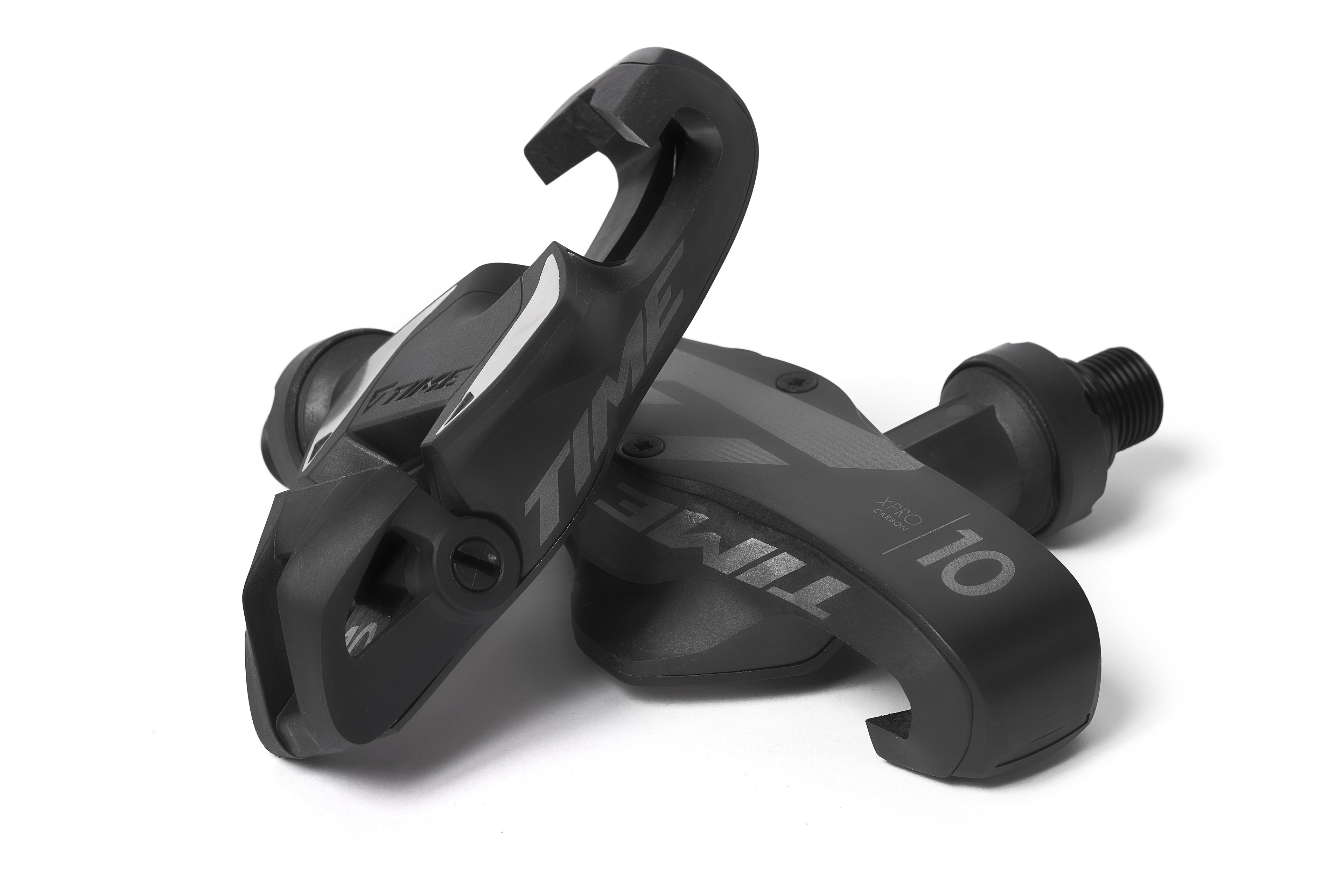
3. Time XPro 10 Pedals
220 Triathlon verdict
Expensive, yet light and durable with lovely engagement and plenty of float.
Pros
- Straightforward set-up
- Easy engagement
- Loads of float
Cons
- Not cheap
- Some squeeking
| Specifications | Time XPro 10 Pedals |
|---|---|
| Price | $150 / £150 |
| Weight | 8oz / 228g (pair) |
| Stack height | 14.7mm |
| Q factor | 51-57mm |
Time’s XPro 10 pedals are pricey, yet they are among the most affordable in the XPro range.
For your money you get a carbon fairing on the back, but the axle and bearings are steel as opposed to titanium and ceramic on the higher-end versions.
You still get pedals that weigh just 4oz/114g each on my scales, and Time’s redesigned cleat that’s both hard-wearing and easy to set up.
It’s perhaps a less positive ‘snap’ than Shimano or Look Keo systems, but the pedals engage with a light click and for us are the easiest to get into.
There’s plenty of float without affecting the great power transfer at all, and there are three tension adjustment settings.
I experienced some unwanted squeaking with Time’s XPro pedals; this doesn’t affect performance, however, and Time says some Teflon spray should solve it.
Review by Jack Sexty
Best budget clipless pedals
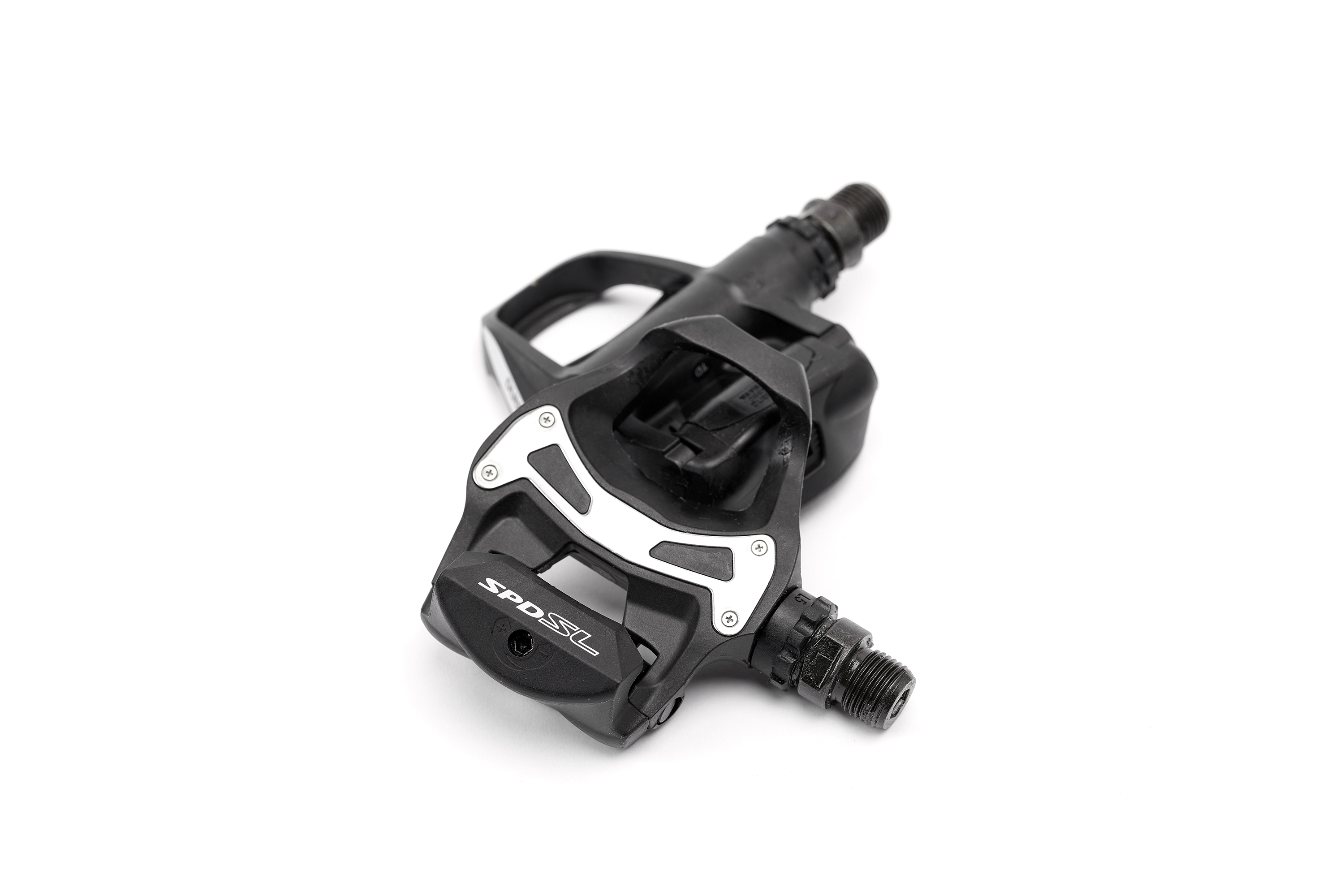
4. Shimano R550 SPD-SL pedals
220 Triathlon verdict
A little weighty, but dependable and well priced pedals.
Pros
- Ideal for beginners
- Economic price
- Secure connection, but easy to clip out from
Cons
- Fairly heavy
| Specifications | Shimano R550 SPD-SL Pedals |
|---|---|
| Price | $100 / £69.99 |
| Weight | 11oz / 312g (pair) |
| Stack height | 16.5mm |
| Q factor | 53mm |
The single-sided R550 sit towards the bottom of Shimano’s exhaustive pedal range, but there’s a broader appeal here than just the wallet-friendly price.
There’s absolutely nothing wrong with cycling in your running shoes if you feel safer and more confident using flat pedals.
But if you want to clip in for the expected power transfer gains it brings – not to mention the enhanced post-swim drainage and ventilation that bike shoes offer – Shimano and Look will likely be your first pedal ports of call.
From humbling experience, just remember to practise clipping out at speed on the turbo trainer or grass!
Like Look pedals, initial set-up with the three-bolt cleat system is straightforward. A clear guide shows how much release tension you’ve created.
Clipping in comes with an assured snap and instantly feels secure (but not excessively so – clipping out is easy), with the wide 70mm platform and stainless-steel body plate offering impressive foot-to-pedal transfer.
The composite body is heavier than carbon and less durable, and the 5.5oz / 156g per pedal weight is unlikely to appeal to weight weenies, but these are reliable picks for a range of triathletes, beginners especially.
Review by Jack Sexty
Best clipless pedals for beginners
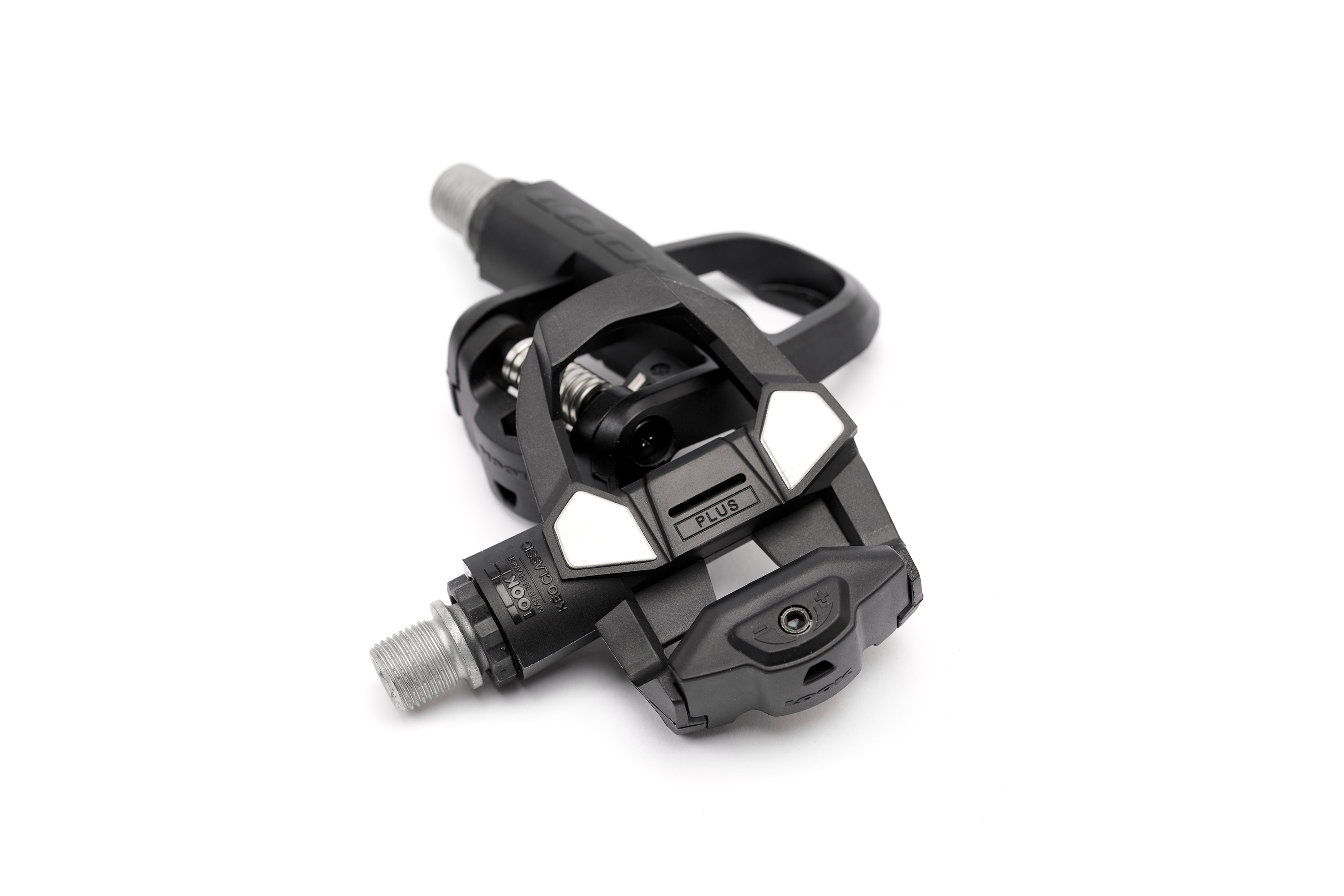
5. Look Keo Classic 3 Plus pedals
220 Triathlon verdict
Easy of engagement makes these a recommended option for newcomers.
Pros
- Simple entry system
- Reasonably priced
- Cleats included
Cons
- Pedal spring is uncovered
| Specifications | Look Keo Classic 3 Plus Pedals |
|---|---|
| Price | $83 / £59 |
| Weight | 9.87oz / 280g (pair) |
| Stack height | 17.8mm |
| Q factor | 53mm |
The body of the Look Keo Classic 3 is constructed using composite material, which again keeps the retail price down compared to Look’s top-end models.
The Plus here relates to small stainless-steel plates to aid durability. You can also adjust the tension for an easier/harder release even if the tension guide isn’t as clear as the Shimano’s (clipping out is refreshingly swift).
The pedal body provides a wide 60mm surface area and weight is 5oz/140g per pedal, lighter than the wider Shimanos but the R550s do have a cover over the pedal’s spring to prevent grit and water degrading it.
We felt the Keo just edged the R500 in hanging at the same angle on the crank and are a tenner cheaper, but both are hard to fault for clipless beginners.
Worth noting is that you get a supplied pair of cleats with both sets here (cleats can cost £20 so look after them!), but take your time setting them up with the pedals or use a bike fitter as poorly aligned cleats can lead to knee troubles.
Review by Jack Sexty
Best clipless pedals for triathlon
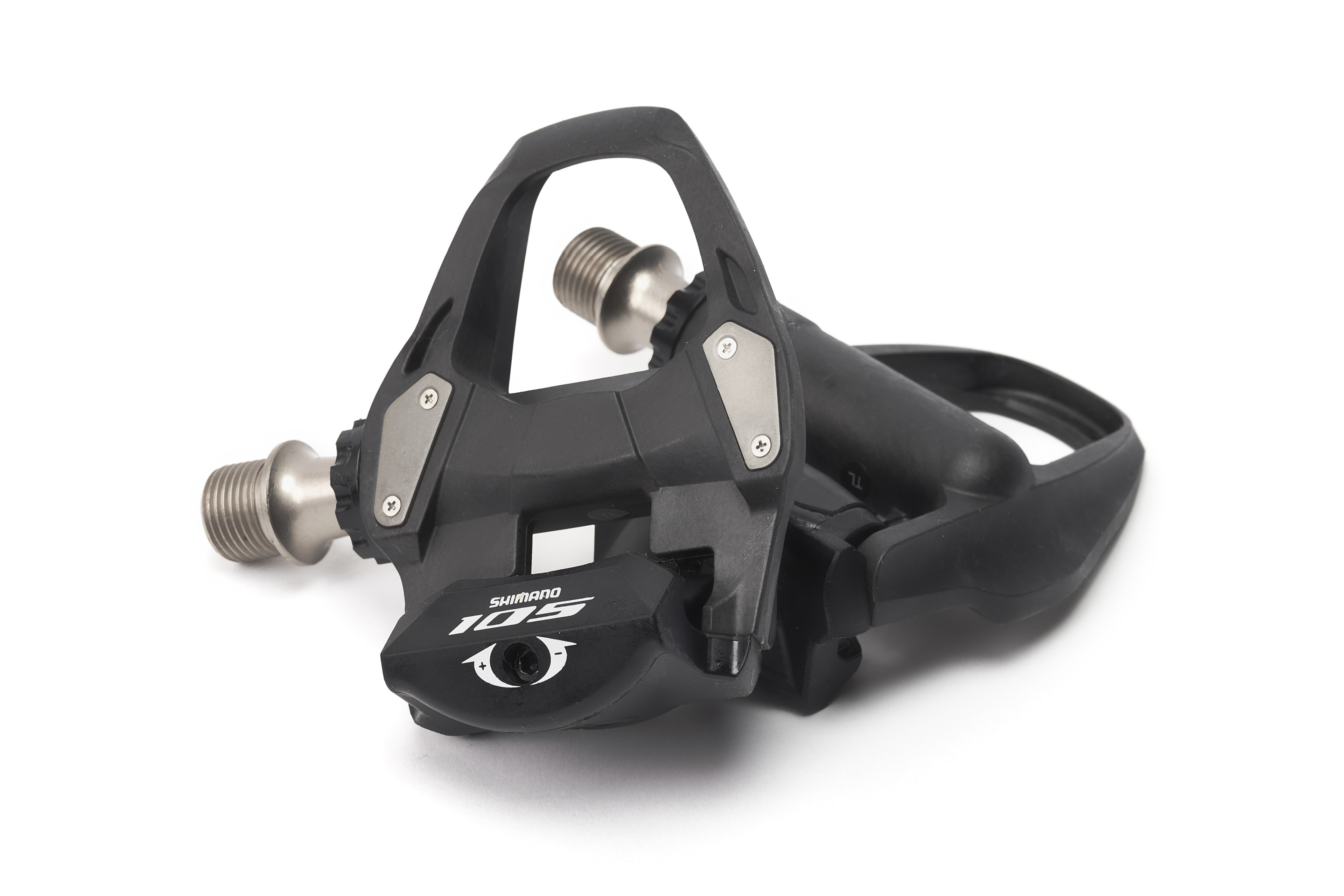
6. Shimano 105 PD-R7000 pedals
220 Triathlon verdict
Superb wide-body pedals that will last you years.
Pros
- Robust
- High-performing
- Great value
Cons
- None
| Specifications | Shimano 105 PD-R7000 pedals |
|---|---|
| Price | $150 / £124.99 |
| Weight | 9.45oz / 268g (pair) |
| Stack height | 16.5mm |
| Q factor | 53mm |
Shimano’s 105-level pedals have stayed the same despite the rest of its 105 groupset getting an overhaul in 2022.
It’s probably because there’s nothing to improve and we woudn’t upgrade from these, either. Weighing 4.6oz/129g per pedal, you get a very wide carbon composite body with replaceable steel inserts, a perfect platform for clipping into quickly and easily, and stamping out power.
The sealed cartridge bearings can deal with the worst weather conditions, and in our experience will still spin smoothly years later.
Shimano’s yellow three-bolt cleats with the highest float are included, but you can change to blue (medium) or red (no float) if preferred.
Shimano’s PD-RS500 or PD-RS550 pedals are also good options and considerably cheaper, but neither have the composite body and the stack height increases.
Review by Jack Sexty
Best mid-level clipless pedals
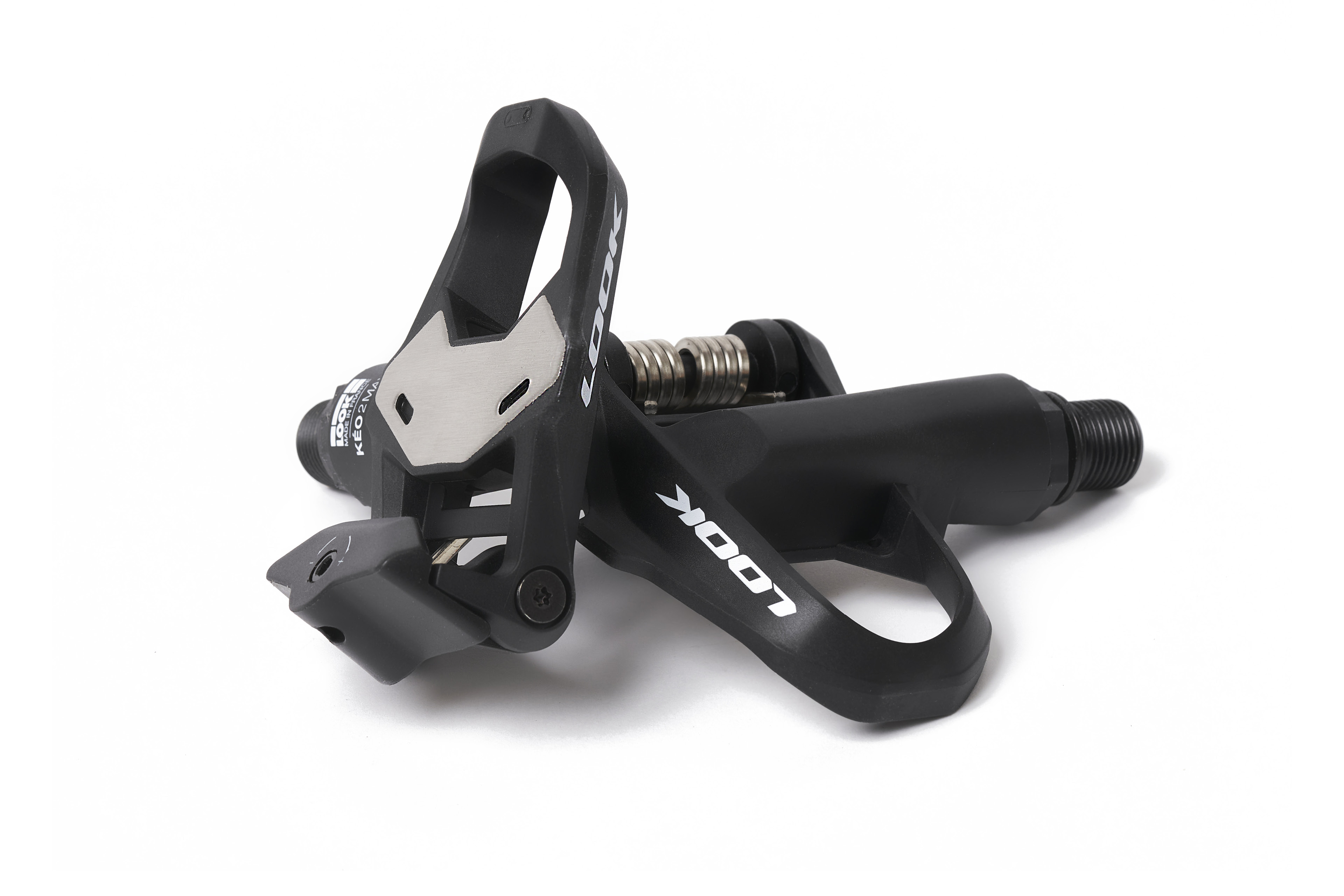
7. Look Keo 2 Max
220 Triathlon verdict
The original and still one of the best road pedals on the market… and at a good price, too.
Pros
- All-round performance
- Decent price
- Simple design
Cons
- Pedal body and cleat are quite small
| Specifications | Look Keo Max 2 Pedals |
|---|---|
| Price | $150 / £80 |
| Weight | 9.2oz / 260g (pair) |
| Stack height | 17.3mm |
| Q factor | 53mm |
The Keo 2 Max has been in Look’s pedal range for several years now, and for good reason: it’s a classic mid-level road pedal for any cyclist or triathlete who wants something affordable and easy to live with.
For £20 more you can upgrade to the carbon-bodied version, but for most of us the composite body with a 500mm² contact area and 4.6oz /130g weight on the Keo 2 Max will suffice.
The pedalling experience is smooth and comfortable, although we found the smaller pedal body and cleat marginally more difficult to find in stop/start situations like traffic lights compared to the wider Shimano and Time pedal systems.
While my testing concluded that there are other brands making Keo-compatible pedals that are just as good for less, you certainly won’t go wrong sticking with Look.
Review by Jack Sexty
Best wide-platform clipless pedals
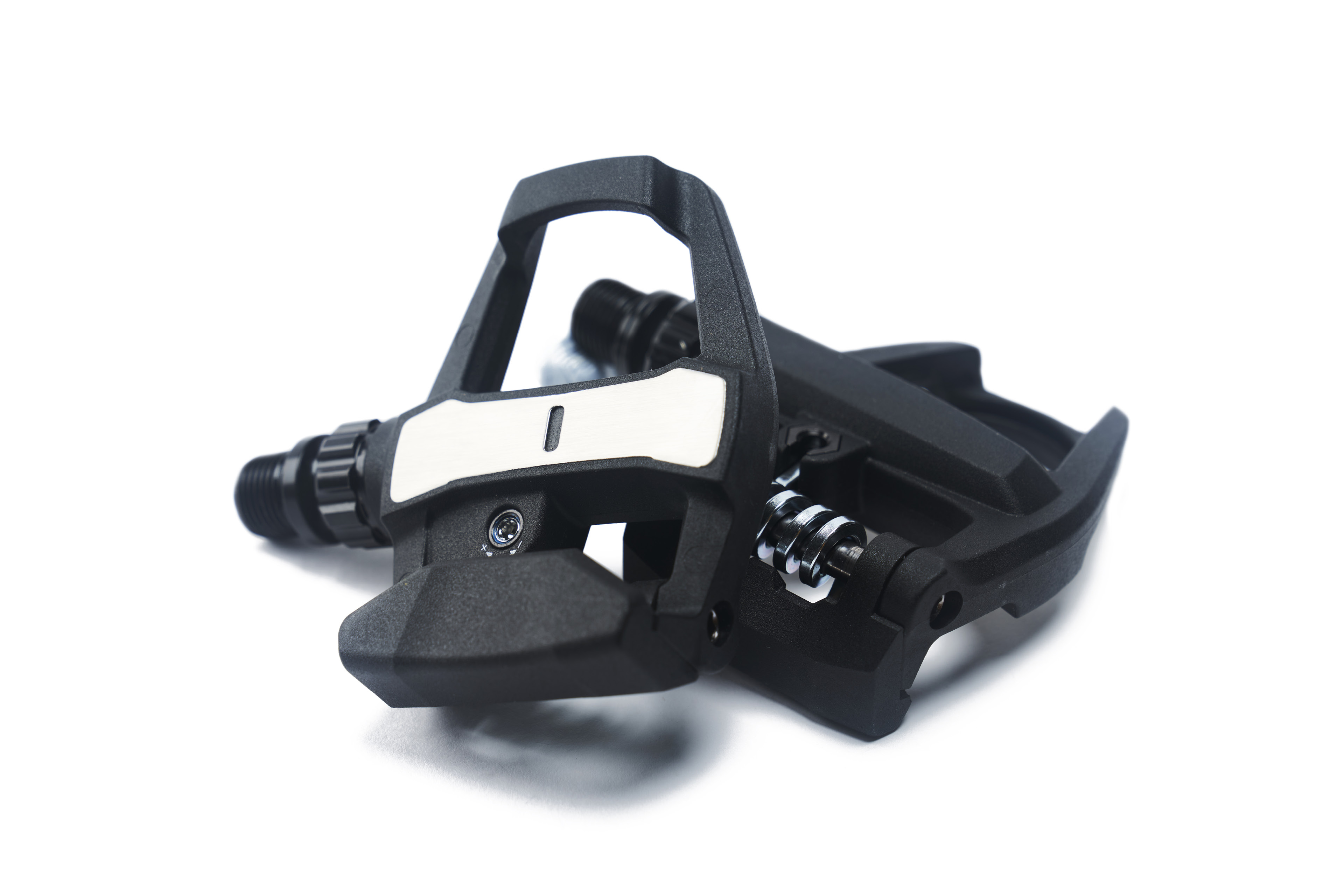
8. Giant Road Elite
220 Triathlon verdict
Super reliable, affordable and easy to use.
Pros
- Very good value
- Lightweight
- Feel efficient
Cons
- None
| Specifications | Giant Road Elite Pedals |
|---|---|
| Price | $80 / £64.99 |
| Weight | 9.2oz / 272g (pair) |
| Stack height | 17.3mm |
| Q factor | 53mm |
Giant’s extensive range of accessories and components include two pairs of Look Keo-compatible pedals, with the Road Elite being the higher-end offering.
The upgrade gets you a composite pedal body, bringing the weight down to 4.5oz/136g per pedal, and a chromoly spindle with adjustable release tension, which is accessible just under the cleat plate.
One reason I lean towards Shimano’s pedal system is the super-wide pedalling platform, which feels more efficient and easier to clip into for me
So I was particularly impressed with the nice wide pedal body on Giant’s offering.
The Road Elite pedal feels very comfortable underfoot, adding to the perception that you’re eking out as many watts as possible through the pedals. Included are a set of Keo-compatible cleats.
Review by Jack Sexty
Most customisable clipless pedals
9. Wahoo Speedplay Aero Pedals
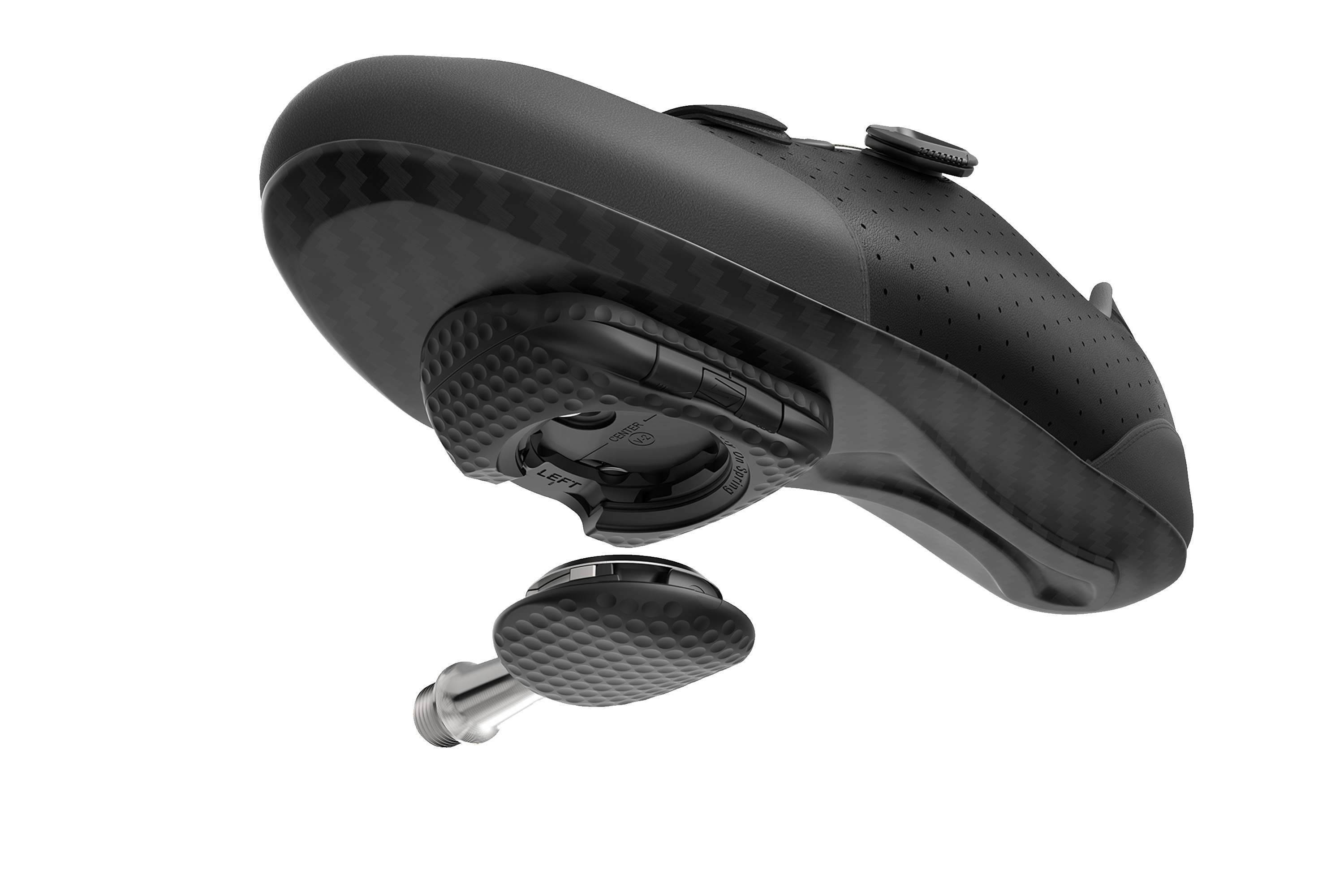
220 Triathlon verdict
Pricey, but worth it for those who value a more customised fit.
Pros
- Brilliant to ride
- Highly customisable
Cons
- Relatively hard to clip into
- Fiddly installation
| Specifications | Wahoo Speedplay Aero Pedals |
|---|---|
| Price | $279.99 / £239 |
| Weight | 7.9oz / 224g (pair) |
| Stack height | 11.5-8.5mm |
| Q factor | 53mm |
The Wahoo Speedplay Aero pedals bring improvements over the previous model including triple-sealed bearings, a steel outer and adjustable float.
Set-up takes some work but once on, the ride experience is superb, with the low stack feeling natural and allowing great power transfer.
Though it takes a bit more effort to clip into the pedals compared to Look and Shimano, the rubber surface makes walking about in them less comical.
Check out my full review of the Wahoo Speedplay Aero Pedals.
Review by Jack Sexty
Best power meter clipless pedals
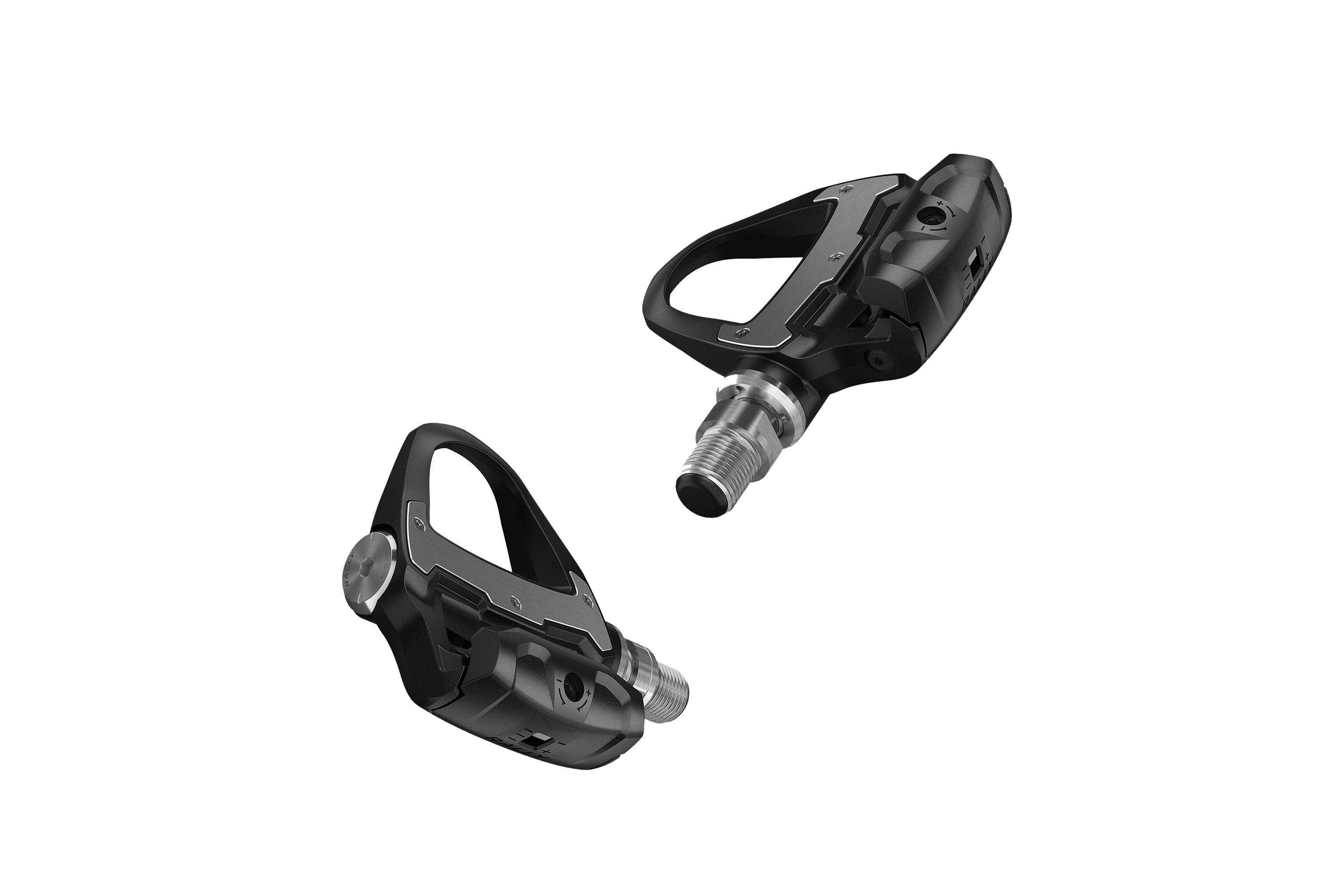
10. Garmin Rally RS200 Power Pedals
220 Triathlon verdict
Prohibitively priced, but otherwise highly accurate and reliable.
Pros
- Accurate power measurement
- No excess weight
- Can be tranformed into SPD-style pedals
Cons
- Extremely expensive
| Specifications | Garmin Rally RS200 Power Pedals |
|---|---|
| Price | $1,099.99 / £969.99 |
| Weight | 11.7oz / 331g (pair) |
| Stack height | 13.5mm |
| Q factor | 53mm |
The Garmin Rally RS800 Power Pedals have the capacity to be used for both road and MTB pedalling.
The Rallys feel solid underfoot and are comparable in weight to normal pedals, despite their power-measuring credentials.
Check out my full review of the Garmin Rally RS200 Power Pedals.
Review by Jack Sexty
| Specifications | Shimano PD-R8000 Pedals | Time XPro 12 SL Pedals | Time XPro 10 Pedals | Shimano R550 SPD-SL Pedals | Look Keo Classic 3 Plus Pedals | Shimano 105 PD-R7000 Pedals | Look Keo 2 Max Pedals | Giant Road Elite Pedals | Wahoo Speedplay Aero Pedals | Garmin Rally RS200 Power Pedals |
|---|---|---|---|---|---|---|---|---|---|---|
| Weight (pair) | 8.7oz / 248g | 6oz / 172g | 8oz / 228g | 11oz / 312g | 9.87oz / 280g | 9.45oz / 268g | 9.2oz / 260g | 9.2oz / 272g | 7.9oz / 224g | 11.7oz / 331g |
| Stack height | 16.5mm | 14.7mm | 14.7mm | 16.5mm | 17.8mm | 16.5mm | 17.3mm | 17.3mm | 11.5-8.5mm | 13.5mm |
| Q factor | 53mm or 57mm | 53mm or 57mm | 51-57mm | 53mm | 53mm | 53mm | 53mm | 53mm | 53mm | 53mm |
| Rating |
★★★★★
|
★★★★★
|
★★★★★
|
★★★★★
|
★★★★★
|
★★★★★
|
★★★★★
|
★★★★★
|
★★★★★
|
★★★★★
|
| Buy Now |
Clipless pedals FAQs
Most people start cycling on flat pedals. Because they’re straightforward to use, you can put all your attention into handling the bike, navigating the roads and trying to avoid hazards.
If you transition from leisure rides or commutes to going further and faster, it makes sense to adopt clipless pedals as soon as possible.
Together with road cycling shoes, they offer more support and stability for your feet, potentially reducing discomfort and improving power output.
This is certainly true when pedalling out of the saddle, when having your foot connected to the pedal prevents it from dangerously slipping off.
It’s best to go straight from flat to clipless pedals. The stage in between, toe or shoe clips, don’t offer the benefits of clipless pedals and require a different technique to get in and out of.
Clipless pedals do add complexity by way of cleats. Go to a professional bike fitter to have these properly set up in order to capitalise on the advantages of clipless pedals without increasing injury risk.
Clipless pedals are best for most kinds of cycling apart from urban riding and commuting.
Flat pedals, which you don’t need to clip into and can ride with normal shoes, are better in stop-start traffic and when you want to walk somewhere after parking your bike.
Clipless MTB pedals split the difference because their double-sided design facilitates entry and exit. As a result, they are popular with some road-based commuters and bikepackers.
Meet our tester
Jack Sexty was a staff writer at 220 Triathlon before becoming editor of road.cc. He has extensive knowledge of cycling tech and heaps of testing experience.
How we tested
All clipless road pedals were tested by former 220 Triathlon staff writer and current editor of Road.cc Jack Sexty.
After fitting them to his triathlon bike, Jack took them for several rides to assess their adjustability, ease of installation, engagement and ride feel while weighing up their spec, infuence on bike fit and value for money.
What are clipless pedals?

The main parts of clipless pedals are the axle and thread, which connect to your bike’s crank arm, the pedal body, which provides a platform for your foot, and the spring mechanism, which connects and disconnects your shoe to the pedal.
Their name can be confusing because you actually clip into them. When Look launched the first clipless pedal in 1984, the term ‘clipless’ differentiated them traditional pedals which incorporated toe clips and straps.
It’s critical to match your shoes, pedals and cleats because they are often specific to riding disciplines and brands.
Clipless road bike pedals use three-bolt cleats as opposed to two-bolt cleats, which are compatible with MTB-style shoes and pedals.
Moreover, Shimano pedals only work with SPD-SL cleats while Look and Time pedals need their own brand-specific cleats.
How to use clipless pedals
To engage your cycling shoe into clipless pedals, you press down the cleat of your cycling shoe over the spring mechanism. When you hear a click and feel a solid connection, you know your cleat and shoe are securely connected to the pedal.
To disengage from clipless pedals, most versions require you turn your heel outwards with some force. You’ll also hear a click when your foot is free. You can adjust the degree of force necessary to unclip by turning a screw on the pedal body.
The foot is securely fixed on the pedal, with various degrees of float (lateral movement) offered by all modern pedal systems to give you freedom to move if necessary, thus protecting the knees.
At first, you’ll want to leave lots of time to disengage your shoe before you have to stop. As you get more experienced, you’ll be able to leave it to the last second.
When it feels harder to clip in and out from your pedals, it probably means it’s time to fit new cleats to your cycling shoes.
What to look for in clipless pedals

As the main interface between you and the bike, your pedals should be comfortable underfoot, reliable and easy to get in and out of.
As triathletes, these first two are extra important because you (hopefully) won’t have to unclip mid-race, though make sure you practise with them loads before race day!
This means walking in cycling shoes is trickier than with recessed commuter/ mountain bike-style shoes, but you get a larger pedalling platform, which is more efficient and comfortable for riding fast on the road.
Clipless pedals range in price from $60 / £60 to more than $500 / £400, so what do you get by spending more?
Materials
Weight differences between pedals tend to be small. Many manufacturers use a very similar mechanism on all their pedals, with the only change being the materials used.
Cheaper models have plastic bodies and steel axles while more expensive models use more premium materials like carbon and even titanium to bring the weight down and increase stiffness.
Steel sealed cartridge bearings are your best bet for year-round riding because they are more durable and weatherproof than ceramic bearings. These are used in top-end models to reduce weight and friction.
Tension adjustment
It’s really useful to be able to adjust the entry and release tension of your pedals.
Beginners will want the pedals as loose as possible to get in and out easily.
As you get more experienced, you might want to add tension for increased stability and security during hard efforts.
Most clipless pedals have a spring on the bottom of the pedal body for you to alter tension. Some premium Look models require you to change a blade inside the pedal.
Power measurement
Power meter pedals, which include power reading capabilities within the pedal itself, will also be more expensive.
Entry system
Most road bike pedals have single-sided entry and are weighted to ensure they usually face the right way up when you want to clip back in. Wahoo Speedplay pedals feature double-sided entry like many off-road pedals.
Stack height and Q-factor
Some clipless pedals influence your bike fit in different ways to others. The key measurements to consider here are stack height (the distance between the pedal axle and the top of the cleat when clipped in) and Q-factor (the distance between the outside of each pedal when they are level with the bottom bracket).
Some triathletes favour a low stack height because it helps them get marginally lower and potentially more aerodynamic on the bike. Q-factor, also known as stance width, comes down to personal preference and in general it should match the width of your hips.
Recent updates
- 8 December 2025: We checked all the pedals were in stock and expanded the FAQ section
- 26 June 2026: We removed three sets of pedals, including the Wahoo Speedplay Nano pedals, Look Keo 2 Max Carbon, to bring you the top ten choices.
- 9 July 2026: We’ve added every product to the ‘at a glance’ panel, added Schema spec and comparison tables and an FAQ section.


 Jack Sexty
Editor at road.cc
Jack Sexty
Editor at road.cc